OSHA guide
OSHA Porta Potty Requirements for Construction Sites
The exact text of Table D-1, the handwashing rule, the mobile-crew exception, Pennsylvania's additions, and the difference between the legal minimum and a count that lasts the week.
Calls answered in person Mon–Sat, 7 AM–7 PM
What does OSHA require for toilets on a construction site?
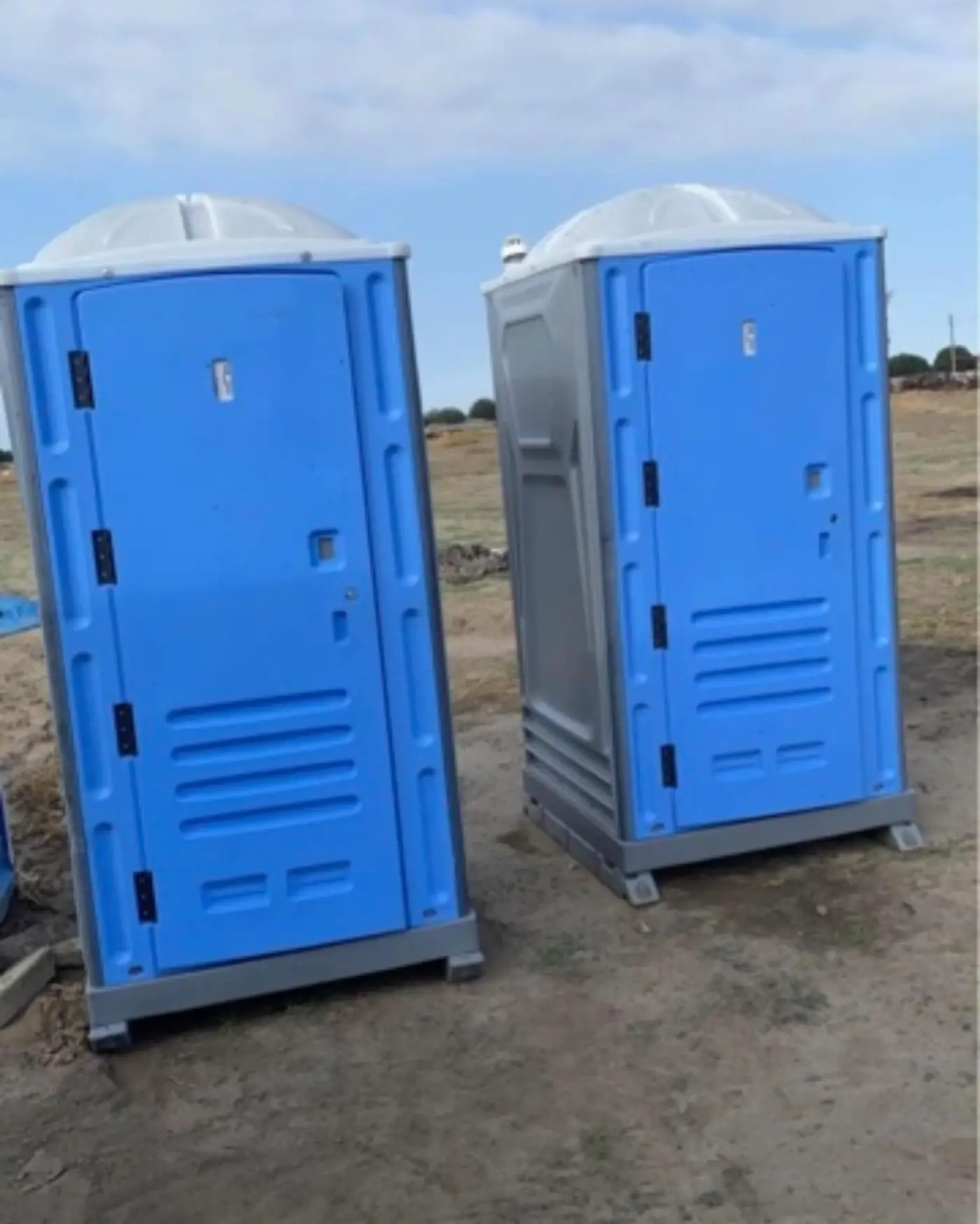
OSHA 29 CFR 1926.51(c)(1) requires toilets at construction jobsites in the numbers of Table D-1: 1 toilet for 20 or fewer employees; 1 toilet seat and 1 urinal per 40 employees for 20 or more; 1 toilet seat and 1 urinal per 50 employees for 200 or more. Under 1926.51(c)(2), a job with no sanitary sewer may use privies, chemical toilets, recirculating toilets or combustion toilets, which is what a porta potty is.
| Number of employees | Minimum number of facilities (Table D-1) |
|---|---|
| 20 or less | 1 |
| 20 or more | 1 toilet seat and 1 urinal per 40 workers |
| 200 or more | 1 toilet seat and 1 urinal per 50 workers |
Source: 29 CFR 1926.51 Sanitation, osha.gov; also at eCFR. Checked October 2026.
The mobile-crew exception
1926.51(c)(4) says the toilet requirement does not apply to mobile crews having transportation readily available to nearby toilet facilities. A two-person service crew with a truck and a gas station two minutes away is covered; a 12-person framing crew on a lot in Penn Township is not.
Does OSHA require handwashing on a jobsite?
Under 29 CFR 1926.51(f)(1), employers must provide adequate washing facilities for employees engaged in operations where contaminants may be harmful, and 1926.51(f)(3) requires lavatories in near proximity to toilet facilities with running water, soap and towels or air dryers. In practice, sites with concrete, paint, lead, silica dust or sewage work need a handwashing station within easy reach of the units.
- One two-sided handwashing station per 10 workers keeps lines short; one per 4 units at minimum.
- Hand sanitizer inside the unit does not meet the running-water requirement where 1926.51(f) applies.
- Potable water (1926.51(a)) is a separate requirement: a water cooler or bottles, not the sink.
What do Pennsylvania and local rules add?
Pennsylvania's Uniform Construction Code (34 Pa. Code §403.21) adopts the International Building Code, whose Chapter 33 requires sanitary facilities during construction; local inspectors in Butler Township, Cranberry Township and the City of Butler look for a toilet on site at early inspections. PA DEP rules govern the waste: portable toilet waste must go to a permitted treatment plant and the hauler must hold a DEP septage transporter registration.
Sources: PA L&I Uniform Construction Code; PA DEP septage hauler registration. Confirm specifics with the municipal code office that issued your building permit.
How does the OSHA minimum compare to a usable count?
The OSHA minimum assumes nothing about tank size. A standard unit holds about 200 uses; a crew of 20 at 3 uses per worker per day fills it in 3.3 days, so a single unit serviced weekly overflows by Thursday. Plan 1 unit per 10 workers with weekly service, or 1 per 20 with twice-weekly service, and the OSHA minimum is met with room to spare.
| Crew | Table D-1 minimum | Usable count (weekly service) |
|---|---|---|
| 8 | 1 | 1 |
| 20 | 1 | 2 |
| 30 | 1 seat + 1 urinal | 3 |
| 60 | 2 seats + 2 urinals | 6 |
| 120 | 3 seats + 3 urinals | 12 |
| 250 | 5 seats + 5 urinals | 25 |
Agricultural employers follow 29 CFR 1928.110 instead: 1 toilet and 1 handwashing facility per 20 employees, within a quarter-mile walk. General industry (fixed workplaces) follows 1910.141. Construction rental details and pricing
What else does 1926.51 say about jobsite toilets?
Beyond the counts, 1926.51(c)(3) requires that toilets be kept sanitary; 1926.51(c)(5) requires the facilities be provided for each sex unless they can be occupied by only one person at a time and lock from the inside, which a porta potty does. Nothing in the standard sets a maximum distance, but the ANSI Z4.3 portable sanitation standard the industry follows recommends units within a reasonable walk and serviced at least weekly.
- Count the crew at peak, including subs, and read Table D-1.
- Round up to usable: 1 unit per 10 workers with weekly service.
- Add a handwash station if 1926.51(f) applies to the work.
- Keep units sanitary: weekly service is built into the 28-day rate.
- Keep access open so the service truck can reach the units every week.
OSHA questions
Does OSHA require a porta potty for a 3-person crew?
Yes, 1 toilet for 20 or fewer workers, unless the crew is mobile with transportation readily available to nearby toilets (1926.51(c)(4)). A 3-person crew on a lot all day with no bathroom within a short drive needs a unit.
Does a porta potty count as a seat and a urinal?
Yes. A standard unit has a toilet seat and a separate urinal, so one standard unit satisfies 1 seat + 1 urinal in Table D-1.
Is hand sanitizer enough for OSHA?
Not where 1926.51(f) applies, which is any work with harmful contaminants (concrete, paint, lead, silica, sewage). Those sites need a washing facility with running water, soap and towels near the toilets, which is what a handwashing station provides.
How often does OSHA say the unit must be cleaned?
OSHA says toilets must be kept sanitary (1926.51(c)(3)) without setting a frequency. Weekly service is the industry standard and is included on all our 28-day rentals; crews over 10 per unit should add a second visit.
Do I need separate units for men and women?
No, when each unit holds one person and locks from the inside (1926.51(c)(5)). A porta potty does both.
What about farm workers?
Agricultural employers follow 29 CFR 1928.110: 1 toilet and 1 handwashing facility per 20 workers, within a quarter-mile walk, for crews of 11 or more doing hand labor in the field.
Order a compliant count for your crew
Calls answered in person Mon–Sat, 7 AM–7 PM